Abandoned • Haunted • Asylums & Hospitals • New Orleans
LINDY BOGGS MEDICAL CENTER
45 people died here when the power went out. The building hasn’t moved on either.
Location
Mid-City, New Orleans
Built
1953 (as Mercy Hospital)
Abandoned
August 2005
Status
Abandoned — for sale

THE STORY
The building started its life as Mercy Hospital in the 1920s, founded by a Roman Catholic order of nuns called the Sisters of Mercy. They’d been operating a hospital on Annunciation Street in the Lower Garden District since 1924, and in 1949 they purchased land in Mid-City to build a larger facility. The new 219-bed hospital opened in 1953.
In 1993, Mercy merged with Southern Baptist Hospital and the two operated together as Mercy+Baptist Medical Center. Later, Tenet Healthcare acquired the Mid-City facility and renamed it Lindy Boggs Medical Center, honoring the Louisiana congresswoman who became the first woman from the state elected to the U.S. House of Representatives. By 2005, Lindy Boggs was a 187-bed acute care hospital offering emergency care, critical care, and organ transplantation services.
Then the storm came. And the hospital became a death trap.
THE NIGHTMARE
When Hurricane Katrina hit on August 29, 2005, Lindy Boggs was at full capacity. Staff, patients, and their families had sheltered in the building, believing a hospital was the safest place to ride out a storm. The hurricane itself caused only superficial damage. It was what came next that killed people.
On August 30, the levees failed. Floodwater poured into the hospital’s basement, destroying the emergency generators. Everything went dark. Elevators stopped. Running water ceased. Waste disposal failed. There was no TV or radio — no way to know what was happening outside, no way to call for help.
Inside, patients on ventilators began dying almost immediately. Without power, there was no life support, no refrigeration for medications, no way to monitor critical patients. Temperatures climbed past 100 degrees in the sealed building. Staff tried to keep patients alive by hand — manually pumping ventilators, rationing whatever supplies they could find. Nineteen people died on the first day alone.
When firefighters finally arrived by boat, they designated Lindy Boggs a Mass Casualty Incident. Rescue crews had to make agonizing decisions about who to evacuate first. Some patients didn’t survive the evacuation itself. By the time it was over, 45 people had died at Lindy Boggs Medical Center — one of the highest death tolls of any single building during Katrina.
TWENTY YEARS OF DECAY
After the evacuation, Tenet Healthcare declared Lindy Boggs too damaged to reopen. They sold the property in 2007 to a Georgia-based real estate company that planned a retail development. That never happened. In 2010, St. Margaret’s Foundation bought the complex for $4.2 million and spent $37 million renovating part of it into a nursing home. But their plans for the main hospital building — a cardiovascular center — fell through when LSU pulled out.
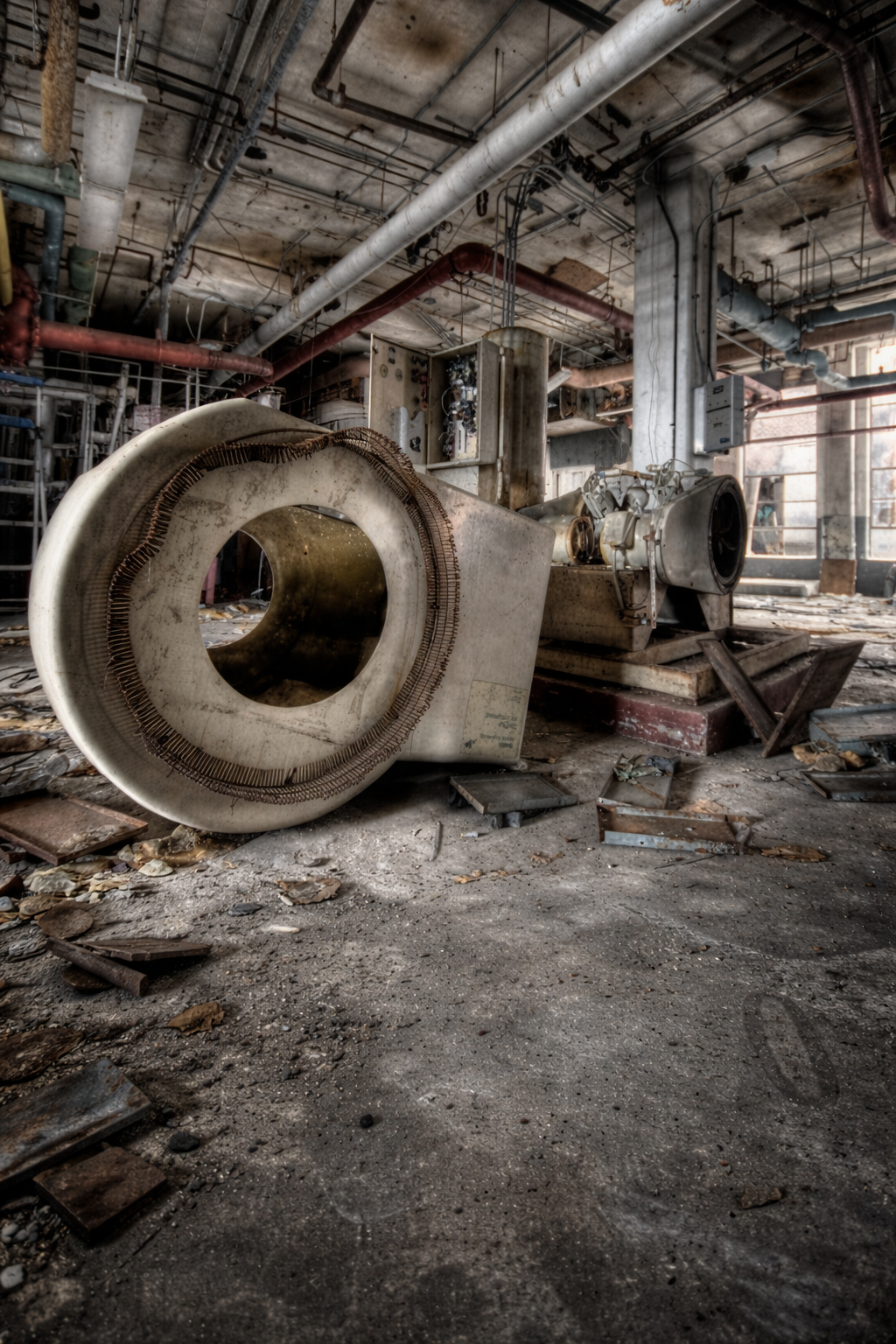
Since then, the 357,000 square-foot hospital complex has sat on nearly 4 acres of Mid-City real estate, rotting in plain sight. The building is now covered in graffiti from floor to ceiling. Windows are blown out. Electrical conduits dangle from ceilings like tentacles. Trespassers — squatters, drug users, graffiti artists, and urban explorers — have moved through the building for years. A fire started by a squatter nearly burned part of it down. Hypodermic needles litter the floors.
And all of this sits directly adjacent to the Lafitte Greenway — a popular bike path and public green space. Families ride past the abandoned hospital on their way to Bayou St. John. Kids play on a playground that sits in its shadow. The contrast is almost unbearable.
THE HAUNTINGS
45 people died in this building in the span of days. That kind of concentrated suffering doesn’t just evaporate when the last ambulance leaves.
Urban explorers who’ve been inside report a full range of paranormal experiences: the sounds of heart monitors beeping in rooms where no equipment remains, coughing and wheezing from empty hallways, the apparitions of doctors and nurses rushing through corridors as if still responding to a code that will never end. Visitors have described seeing figures of patients in beds — dying, begging for help — in rooms that have been stripped to bare walls.
One explorer described turning a corner into a room that had caught fire after the abandonment. The burnt paint chips on the walls seemed to move and breathe. For a moment, the room felt like it was still burning — ghost flames in a building already full of ghosts.
WHAT HAPPENS NEXT
Developers have come and gone for nearly two decades. Retail plans, a cardiovascular hospital, a memory care facility — every proposal has collapsed under the weight of funding problems, pandemic delays, or sheer complexity. The property was put back on the market as recently as 2023, marketed as a prime urban redevelopment opportunity with historic tax credit potential.
Mid-City neighbors are exhausted. For almost 20 years, they’ve watched the building attract crime, drug use, and trespassers while every promise of redevelopment turns to dust. The neighborhood around it has transformed — new condos, beer gardens, the Lafitte Greenway — while Lindy Boggs sits frozen in 2005, a 357,000 square-foot wound that refuses to heal.
EXPLORATION NOTES
⚠️ Important
Lindy Boggs Medical Center is privately owned property. Entry is illegal trespassing. The building is in severe structural disrepair and contains environmental hazards including mold, asbestos, hypodermic needles, and unstable flooring. The site has been associated with drug activity and crime. The building is highly visible from the Lafitte Greenway and surrounding streets, which offer clear views and photo opportunities from a safe, legal distance.
The Lost Directory does not encourage trespassing. 45 people lost their lives in this building. Treat it with the gravity it deserves.
PHOTO GALLERY


Replace these placeholders with your own photography or licensed images.
Know more about this location? Have photos to share? Submit your own documentation and help us preserve the memory.