Ghost Towns • Haunted • Historical • Alabama
OLD CAHAWBA
Alabama’s first capital. A Civil War prison. A ghost town swallowed whole by the wilderness. And something still glows in the ruins at night.
Location
Dallas County, Alabama
Founded
1819 (State Capital 1820-1826)
Abandoned
~1900 (unincorporated 1989)
Status
Archaeological park — open to visitors

THE RISE
Before Alabama was even a state, Indigenous people had lived at this spot for over 4,000 years. Spanish explorer Hernando de Soto may have passed through a large Indian village here in 1540. But the modern story of Cahawba begins in 1819, when Alabama was carved out of the wilderness and needed a capital.
Governor William Wyatt Bibb chose a site at the confluence of the Cahaba and Alabama Rivers — a gift of land from President James Monroe. The town was laid out in a neat grid like Philadelphia, with streets named for trees and famous men. Land speculation exploded. Lots that once sold for $1.25 per acre skyrocketed to $70 as investors rushed to stake their claims in the new state capital.
By 1820, Cahawba was a fully functioning state capital with a brick Capitol building, fine homes, hotels, and a state bank. It was supposed to be permanent. It lasted six years.
THE FALL
The rivers that gave Cahawba life also destroyed it. Sitting at the confluence of two waterways meant regular flooding and swarms of mosquitoes carrying fever. Political opponents used the town’s reputation as an unhealthy swamp to lobby the legislature into moving the capital to Tuscaloosa in 1826. Within weeks, Cahawba was nearly abandoned.
But Cahawba refused to die — at first. The town reinvented itself as a cotton port on the Alabama River. Paddlewheel steamboats lined the bluff, loading thousands of bales from surrounding plantations. A railroad arrived in 1859. By the eve of the Civil War, over 3,000 people called Cahawba home. Fine mansions lined streets shaded by oaks draped in Spanish moss. It was a second golden age.
Then the war came, and this time Cahawba didn’t survive.
CASTLE MORGAN
The Confederate government seized Cahawba’s railroad, ripped up the iron rails, and used them elsewhere. Then they converted a large cotton warehouse in the center of town into Castle Morgan — a prison for captured Union soldiers. Designed to hold 500 men, the prison swelled to over 3,000 as the war ground on and prisoner exchanges were halted.
Conditions were horrific — cramped quarters, lice, almost no food or medicine, and no bedding. As many as 147 men died inside Castle Morgan. But the cruelest twist came after the war ended. Many of the surviving prisoners were loaded onto the steamboat Sultana for the journey home. On April 27, 1865, the overcrowded Sultana exploded on the Mississippi River. As many as 2,000 of the freed prisoners died — men who had survived Cahawba’s hell only to burn on the water.
In 1865, a massive flood inundated the town. In 1866, the county seat was moved to Selma. Businesses left. Families left. Within ten years, people were dismantling the houses and shipping the materials to other towns. By 1900, most of Cahawba’s buildings had burned, collapsed, or been taken apart brick by brick. A freedman bought most of the old town for $500 and sold the scraps downriver. The town wasn’t officially unincorporated until 1989 — but by then, only fishermen and hunters walked its abandoned streets.
THE HAUNTINGS
Cahawba has been generating ghost stories for over 150 years. These aren’t modern inventions — they’ve been passed down through generations, documented in books, and experienced by park visitors in broad daylight.
The most famous haunting is the ghostly orb of Colonel C.C. Pegues. On the site where his mansion once stood — a lot that occupied an entire block between Pine and Chestnut Streets — a luminous ball of light has been seen drifting through what was once a garden maze. The orb is believed to be Colonel Pegues himself, who died at the Battle of Gaines’ Mill in Virginia during the Civil War. His spirit reportedly returned to the home he loved and never left. The story was recorded in “Specter in the Maze at Cahaba” in the book 13 Alabama Ghosts and Jeffrey, one of the state’s most well-known collections of supernatural folklore.
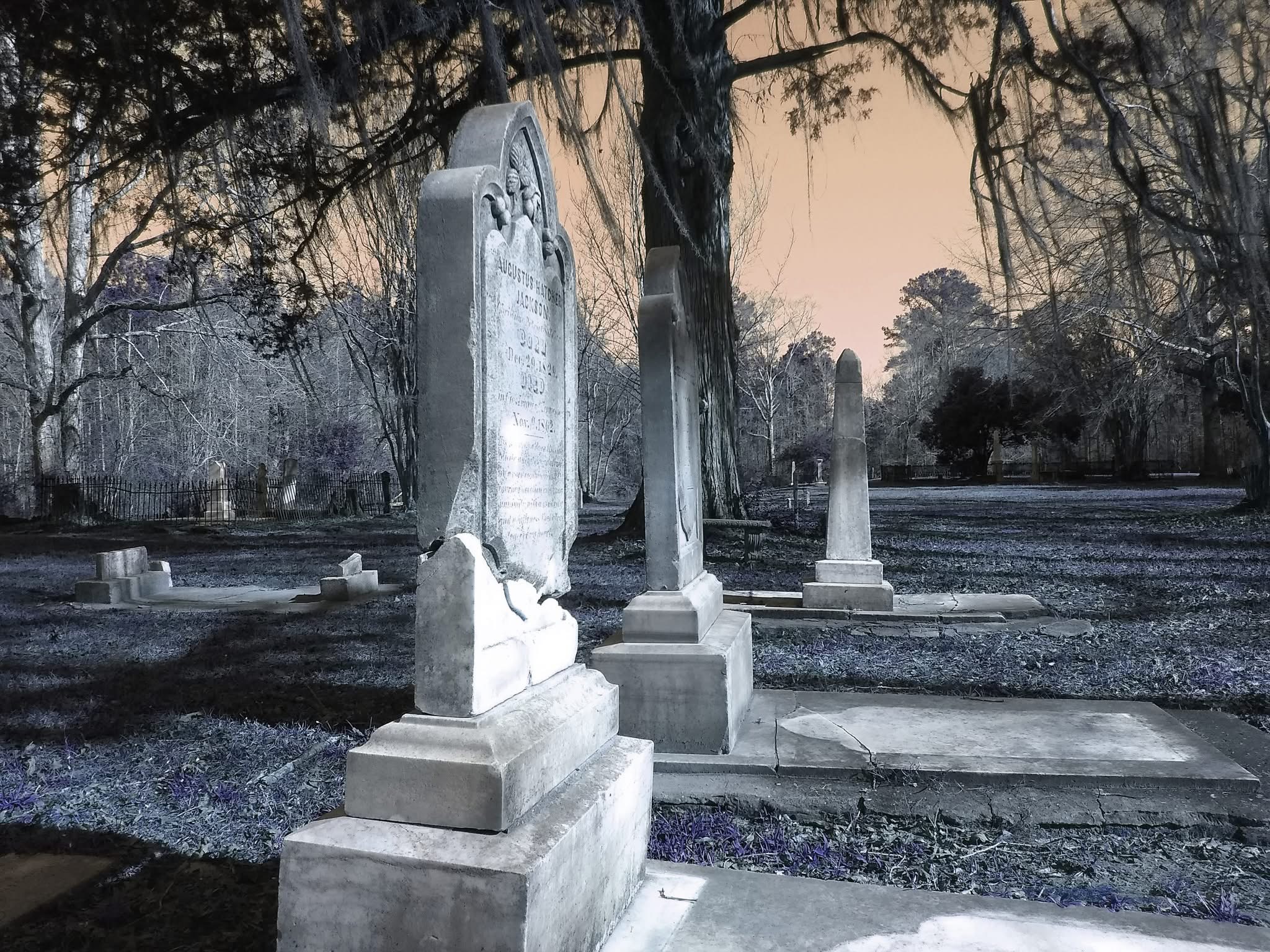
The New Cemetery is considered the most haunted spot within the park. Visitors have reported apparitions among the moss-covered headstones, cold spots on warm Alabama days, and the unmistakable feeling of being watched from the tree line. Eerie figures have been seen near the ruins of the slave quarters. Some say they are the spirits of Union soldiers who died at Castle Morgan. Others say they’re much older — echoes of the people who lived on this land for thousands of years before Alabama was a state.
Cahawba was named one of the World’s 10 Spookiest Ghost Towns and has appeared in national paranormal publications, coffee table books, and on ghost hunting television programs. Unlike many haunted locations, the activity here doesn’t wait for darkness. Park visitors report encounters during the park’s open hours — 9 AM to 5 PM. Whatever haunts Cahawba doesn’t care about the time of day.
VISITING
📍 How to Get There
Old Cahawba Archaeological Park is managed by the Alabama Historical Commission and is open to the public. From Selma, take AL-22 West for 9 miles, turn left on County Road 9 for 5 miles, then turn left on County Road 2 to enter the park. The site includes a welcome center, three cemeteries, ruins, artesian wells, nature trails, and picnic areas.
The park offers guided history tours and, during October, Haunted History tours where historians lead visitors to the most haunted locations within the ghost town while a team of paranormal investigators conducts live mini-ghost hunts. Bring your camera — the moss-draped oaks, crumbling brick columns, and overgrown streets make Old Cahawba one of the most photogenic ghost towns in the South.
A state capital. A prison. A ghost town. A place where the living and the dead share the same ground. Cahawba didn’t just disappear — it was erased. And whatever remains refuses to leave.
PHOTO GALLERY


Replace these placeholders with your own photography or licensed images.
Know more about this location? Have photos to share? Submit your own documentation and help us preserve the memory.