Abandoned • Haunted • New Orleans, Louisiana
THE HOUSE OF DETENTION
They locked people inside these walls. Then the storm came and everyone left.
Location
2735 Perdido St, New Orleans
Built
1966
Closed
2012
Status
Slated for demolition

THE STORY
The House of Detention rises ten stories above Perdido Street in Mid-City New Orleans — a Brutalist concrete monolith that looks exactly like what it was: a place designed to cage human beings. Completed in 1966 and designed by Curtis and Davis, the same architecture firm that built the Superdome and the beloved Rivergate convention center, the H.O.D. was the crown jewel of the Orleans Parish Prison complex. Crown jewel is generous. It was the tallest, most visible, and most feared building in the system.
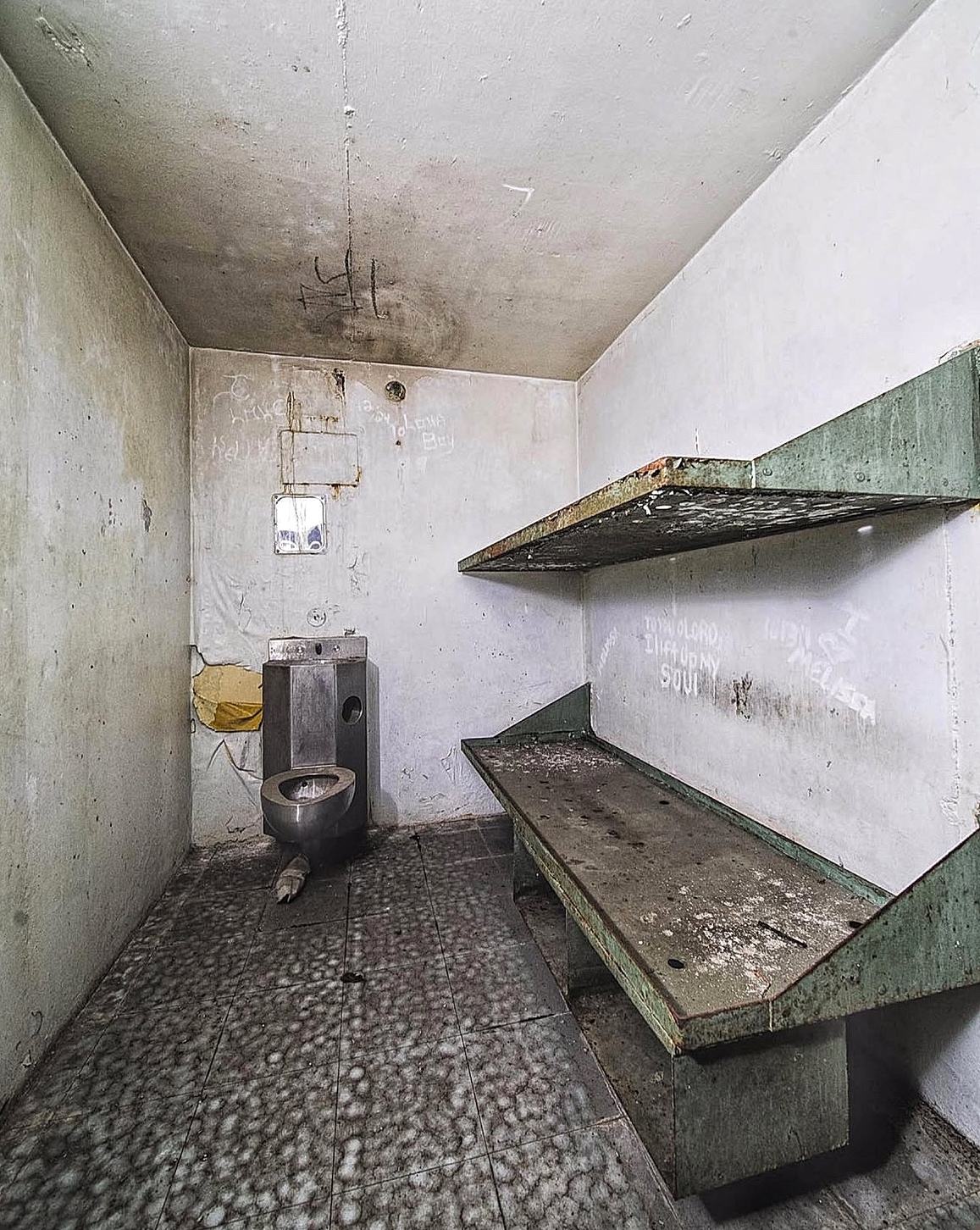
Standard 10-man cells occupied floors three through seven. There was no air conditioning. Almost no heat. In the sweltering New Orleans summers, inmates described sheets soaked in sweat within minutes of lying down. In winter, the concrete walls turned the building into a refrigerator. Guards rarely patrolled. Prisoners had access to drugs and weapons — kitchen knives, even handguns — smuggled in by guards. Violence was constant. In 2012 alone, there were 600 ambulance runs to the emergency room, more than half related to inmate-on-inmate violence.
Researchers considered Orleans Parish Prison one of the worst jails in the country. Inmates lived in constant fear of being beaten or worse. A class-action lawsuit was filed in 1969. Over the following decades, conditions barely improved. The H.O.D. wasn’t just a building — it was a machine that processed suffering on an industrial scale, overwhelmingly impacting poor Black men from neighborhoods like Central City.
THE STORM
On August 29, 2005, Hurricane Katrina made landfall. As the levees broke and floodwaters consumed New Orleans, the House of Detention lost electricity, water, and all communication with the outside world. What happened next became one of the most disturbing chapters of the Katrina disaster.
Officers abandoned the building. They left. Hundreds of incarcerated men, women, and children remained locked in their cells as water rose, toilets overflowed, and darkness closed in. There was no food. No clean water. No ventilation. Survivors later described screaming, pounding on walls, and the terror of not knowing whether anyone was coming back for them.
Many were left for days. When help finally arrived, prisoners were evacuated to the I-10 overpass and the Broad Street overpass, where they were forced to sit in rows in the open air with no food, water, or medical care. According to the ACLU, which conducted over 400 testimonials from survivors, inmates described beatings by staff, racially motivated abuse, and conditions that human rights organizations later called “tantamount to torture.” Human Rights Watch reported 517 prisoners as “unaccounted for.” There has never been an official death count.
THE ABANDONMENT
After Katrina, the H.O.D. limped back into service, but a federal probe found conditions so unacceptable that Sheriff Marlin Gusman began relocating inmates in 2012. When the new Orleans Justice Center opened in 2014, the House of Detention was officially shuttered. The doors were locked. The lights went out. No one came back.
The 10-story tower has stood vacant ever since — a concrete ghost looming over Perdido Street. Its vertical cladding and narrow slit windows give it the look of a fortress, or a tomb. The building contains asbestos, making any reuse essentially impossible. Despite being deemed eligible for the National Register of Historic Places for its Brutalist architectural significance, the structure has been slated for demolition. The city redirected the $8.3 million in FEMA demolition funds to build a new mental health annex at the current jail. Now $11 million must be found before the wrecking ball can swing.
So it waits. A concrete monument to everything New Orleans’ criminal justice system got wrong, standing in plain sight in the middle of the city.
THE WEIGHT IT CARRIES
Some abandoned buildings are beautiful in their decay. The House of Detention is not one of them. It doesn’t invite you in with crumbling charm or overgrown ivy. It repels. Even from across the street, people who spent time inside say they can feel it.
Criminal justice advocates have pushed to ensure the building’s human history is documented before demolition. The architecture tells one story — the Brutalist design, the era of civic construction it represents. But the human story is darker: generations of New Orleanians, overwhelmingly poor, overwhelmingly Black, locked inside a building where the state failed them in every measurable way. And then, when the storm came, abandoned them entirely.
“That building carries something heavy,” one former detainee said. “Some people drive by and don’t even see it — but if you lived it, you don’t forget.”
EXPLORATION NOTES
⚠️ Important
The House of Detention at 2735 Perdido Street is a city-owned property that is closed to the public. The building is fenced, monitored, and contains confirmed asbestos and other environmental hazards. Entry is illegal and extremely dangerous. The structure is slated for demolition pending funding. The building is visible from the street and surrounding sidewalks, which offer clear sightlines for exterior photography.
The Lost Directory does not encourage trespassing. This entry exists to document and remember what happened here — both to the building and to the people inside it. Some places deserve to be remembered not for how they look, but for what they did.
PHOTO GALLERY


Replace these placeholders with your own photography or licensed images.
Know more about this location? Have photos to share? Submit your own documentation and help us preserve the memory.