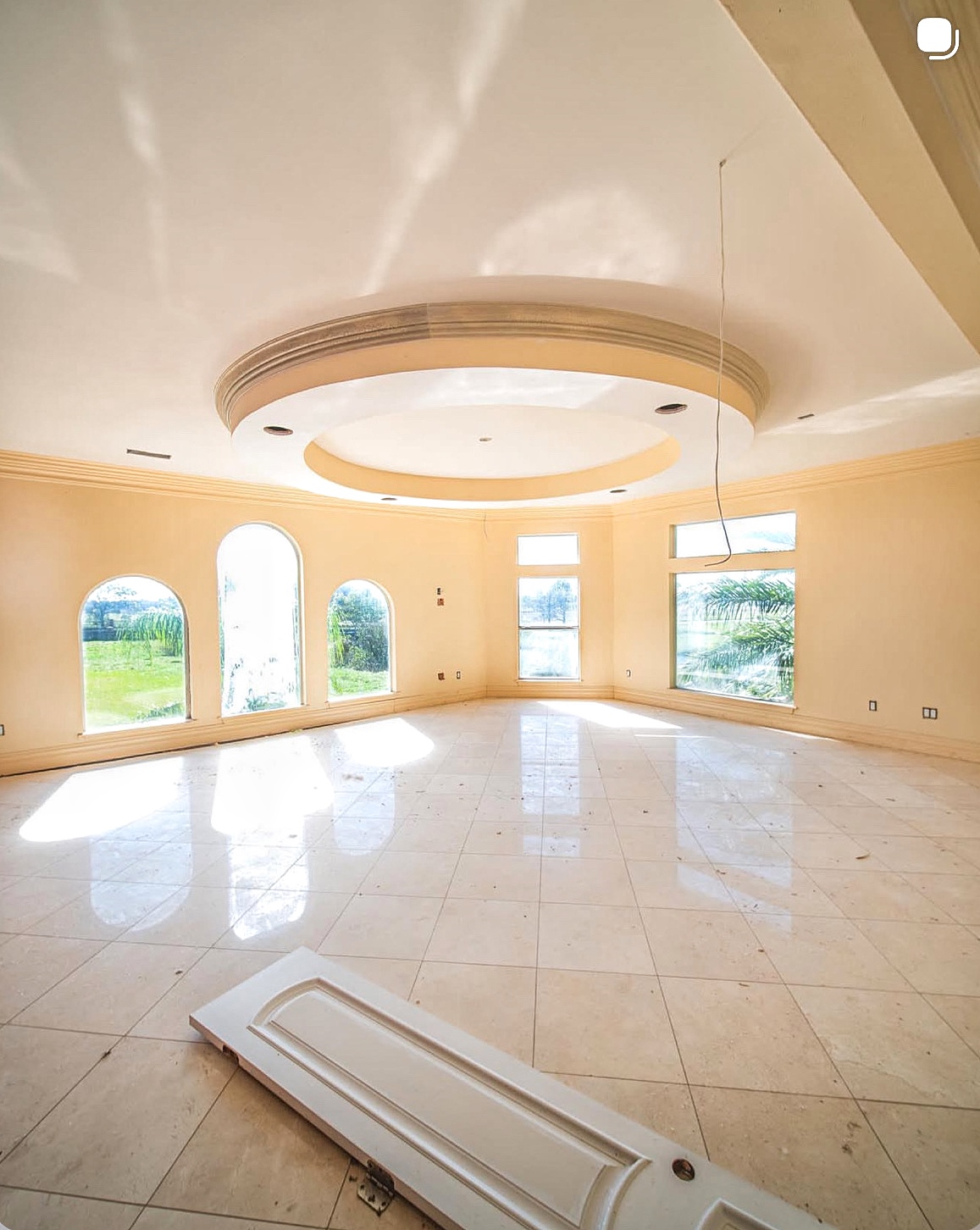
Abandoned • New Orleans East, Louisiana
THE CASH MONEY MANSION
11,000 square feet of hip-hop royalty. Left to rot since 2005.
Location
New Orleans East, Louisiana
Built
1990
Abandoned
2005
Status
Abandoned — privately owned

THE STORY
Tucked away in a gated subdivision in New Orleans East, this nearly 11,000 square-foot mansion was built in 1990 and originally belonged to NFL linebacker Pat Swilling, who starred for the New Orleans Saints. In 2004, the property was purchased by Bryan “Birdman” Williams, co-founder of Cash Money Records — the label that launched Lil Wayne, Drake, Nicki Minaj, and an entire era of Southern hip-hop.
For a brief moment, the mansion was the physical embodiment of Cash Money’s rise. It featured in the music video for Birdman and Lil Wayne’s 2005 track “Neck of the Woods” — all white columns, arched windows, and excess on full display. Five bedrooms, Italian marble floors, a private movie theater, a sauna, two hot tubs, a four-car garage, an elevator, a swimming pool, and a custom-built recording studio on the top floor with red walls and a uniquely shaped high ceiling.
Then Katrina hit. And the music stopped.
THE ABANDONMENT
Hurricane Katrina ripped through New Orleans on August 29, 2005, and New Orleans East was devastated by flooding. The mansion sustained significant damage. Like thousands of other property owners, the residents evacuated. Unlike most, they never came back.
For over 15 years, the mansion has sat vacant and deteriorating. Reports suggest it may have been undergoing renovations at the time of the storm — unfinished stairs and an incomplete kitchen were noted by urban explorers who later documented the interior. Whatever work was planned, it stopped permanently the day the levees broke.
The property is valued at roughly $650,000 to $740,000 today — a stunningly low number for nearly 11,000 square feet. But the area’s flood risk and history of natural disasters make it a gamble few are willing to take.
INSIDE THE RUINS
From the outside, the all-white exterior with its arched windows and French doors still looks surprisingly intact — a ghost of grandeur that’s easy to spot even from a distance. But step inside and the illusion falls apart.
The grand foyer opens to twin spiraling staircases — once a statement of wealth, now a monument to decay. The Italian marble floors are covered in debris. Mold has consumed walls and ceilings throughout. The master bedroom, which once offered views of the Mississippi River and featured a jacuzzi next to a fireplace, is now stripped of its grandeur. The swimming pool in the back is a swamp of green algae. The hot tubs are empty craters.
The top floor is where it hits hardest. The custom recording studio — walls painted blood red, high ceilings designed for acoustics — still stands. This is the room where Cash Money records were made. Where beats were laid down and verses were written that would change the course of Southern rap. Now it’s silent. The red paint is fading. The equipment is gone. All that’s left is a shell and the echo of what was.
WHY IT MATTERS
This isn’t just another abandoned mansion. It’s a time capsule of a very specific moment in music history and New Orleans culture. Cash Money Records didn’t just make music — they built an empire from the streets of the city’s housing projects and put New Orleans on the national hip-hop map. This mansion was the physical proof that they’d made it.
But it’s also part of a much bigger story. New Orleans East was one of the hardest-hit areas during Katrina, and many of its residents — wealthy and working class alike — never returned. Entire neighborhoods were abandoned. The mansion is one of many properties in the area that still sit empty, reminders that Katrina didn’t just damage buildings. It displaced a culture.
The music video still exists online. You can watch it and see the mansion in its glory. Then look at what it’s become. That contrast is the whole story of post-Katrina New Orleans.
EXPLORATION NOTES
⚠️ Important
This is private property. The mansion sits within a gated subdivision in New Orleans East and remains privately owned. Entry without permission is illegal trespassing. The property contains mold, structural decay, and environmental hazards. The area is also prone to flooding.
The Lost Directory does not encourage trespassing on private property. This entry exists to document a culturally significant location tied to New Orleans’ music history and the lasting impact of Hurricane Katrina. Respect the property. Respect the neighborhood.
PHOTO GALLERY


Replace these placeholders with your own photography or licensed images.
Know more about this location? Have photos to share? Submit your own documentation and help us preserve the memory.